© 2035 by The Clinic. Powered and secured by Wix

Flipped Classroom Pitch Deck
Immersify
Pitch Deck
Presentation Design
Overview
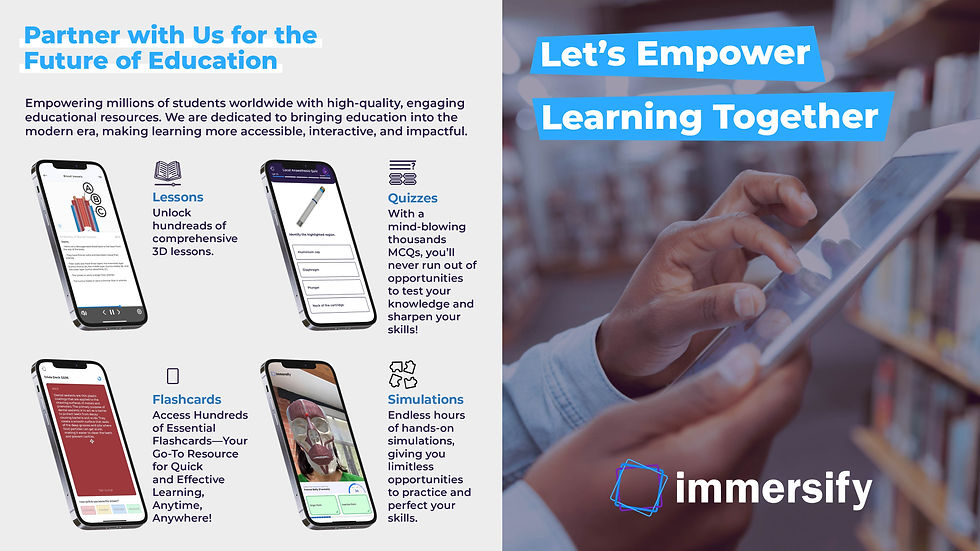
I was tasked with creating a visual-first pitch deck for Immersify’s sales team. The goal wasn't just to present features, but to grab attention at academic events and spark meaningful conversations with university decision-makers. Rather than relying on standard corporate slides, I built a story-led presentation using a rich collage aesthetic to illustrate the evolution of education through the lens of the four industrial revolutions, positioning Immersify as the definitive solution for Education 4.0.
Objective
To design a visually compelling, infographic-style slide deck that:
-
Narrates the chronological journey of learning, from the rigid Victorian era to the dynamic landscape of Education 4.0.
-
Visually exposes the systemic friction where outdated tools fail modern digital natives.
-
Positions Immersify as the necessary bridge to future-ready learning.
-
Utilizes data-driven visuals and illustrative storytelling to persuade academic stakeholders.
The Challenge
Traditional educational tools are no longer keeping pace with the demands of modern learners, and the sales materials promoting them often suffer the same fate. The sales team needed a disruptive presentation that could:
-
Cut through the noise at busy academic events.
-
Communicate complex, systemic educational challenges instantly through visual metaphors.
-
Clearly demonstrate how Immersify bridges the gap between archaic methods and immersive experiences.


The Process
Research & Discovery
I began by deep-diving into the historical context of the four industrial revolutions to map exactly how each era reshaped industry and education. This historical analysis was paired with modern research into current friction points: specifically, the widening gap between digital-native students and the traditional academic structures failing to engage them.
Visual Planning
To translate this research into a narrative, I developed a story arc that physically moves the viewer through time. Through moodboarding and sketching, I planned a visual journey starting from the sepia-toned rigidity of Victorian classrooms and accelerating toward the vibrant, interactive possibilities of Education 4.0. The goal was to use contrasting imagery, layered textures, and timeline-based visuals to make the evolution tangible.
Design Development
I executed the final deck using a mixed-media collage aesthetic. This style was a strategic choice to mirror the "patchwork" nature of educational history, old systems trying to fit into new worlds. I utilized bold typographic hierarchy and clean, modern iconography to slice through the visual complexity, ensuring that key statistics acted as signposts, guiding the viewer effortlessly from the problem to the Immersify solution.

Elements
To build this story-driven deck, I started with a deep dive into the four industrial revolutions, exploring how each shaped not just technology, but also the way we teach and learn. Alongside that, I investigated the real challenges faced by modern learners, educators, and institutions, from disengagement and retention issues to the lack of visual, interactive resources in mainstream education.
Crafting a Visual Language

This research helped me shape a narrative that speaks to multiple audiences at once: the end-user students, as well as the educators and faculties seeking smarter ways to support them.
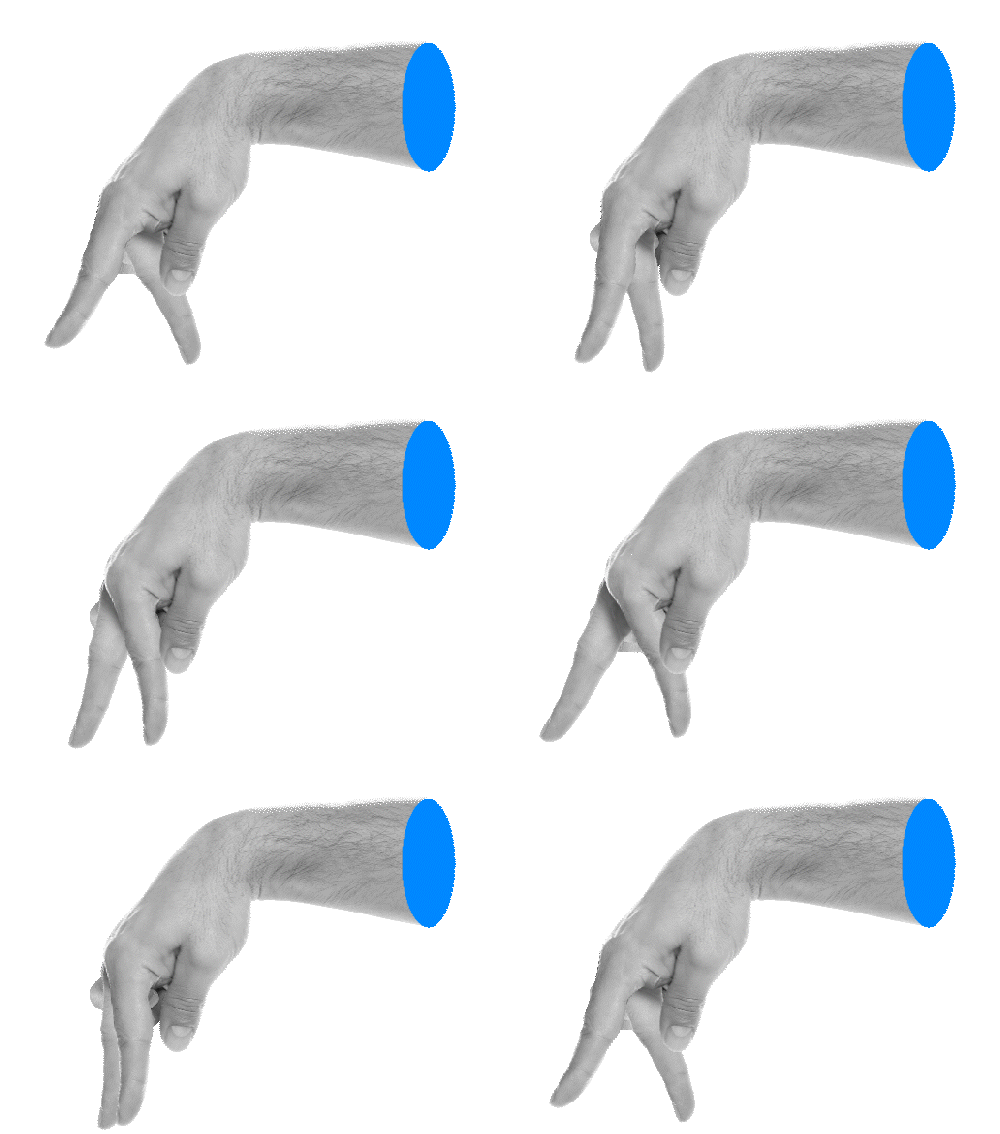
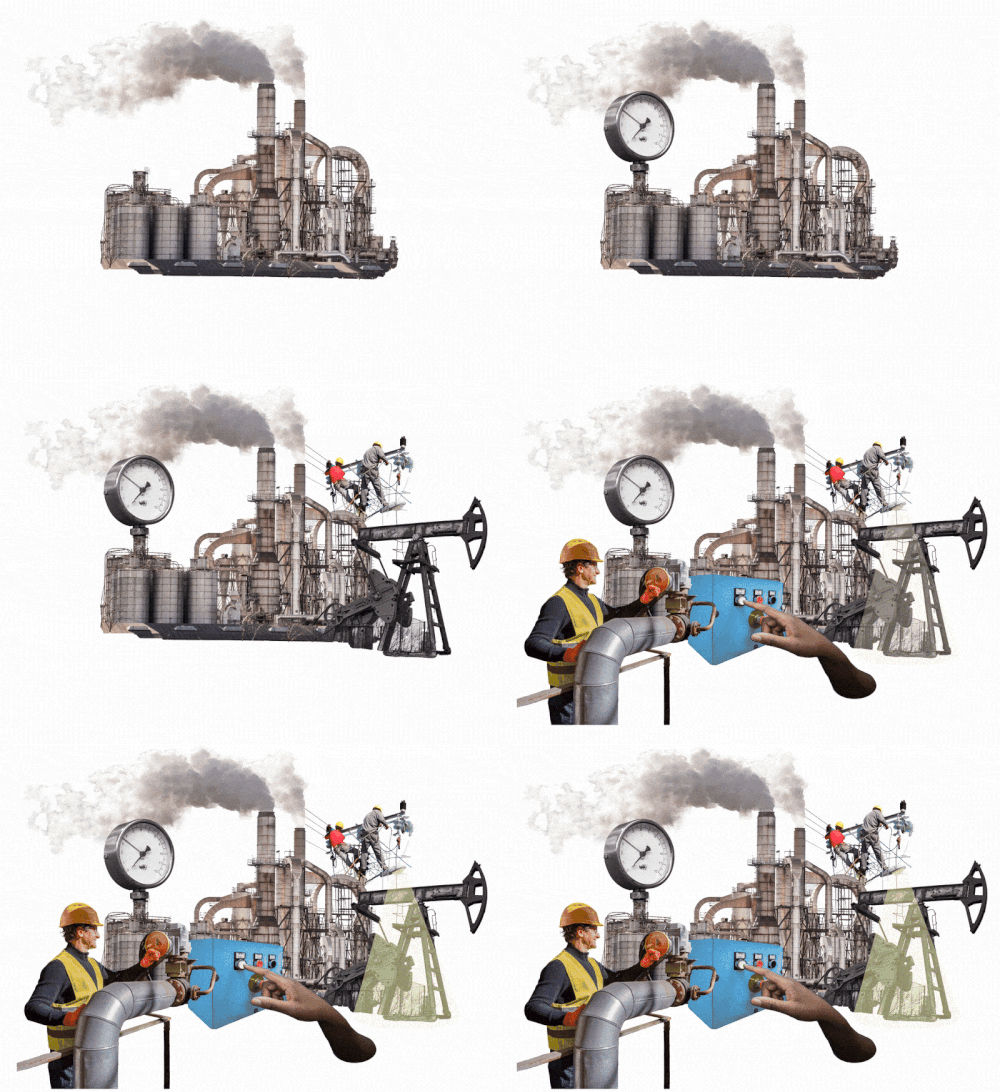
From there, I curated a visual language that evolves with the story. I paired collage-style imagery, textures, and typography with moments of data-driven clarity, ensuring every visual decision was intentional. To bring this concept to life, I incorporated subtle motion through GIFs and animations, adding a layer of depth that mirrors the transition from static, traditional learning to dynamic, immersive experiences.
The goal wasn't just to create something that looks great, it was to design a deck that feels cohesive, compelling, and purposeful from the first slide to the last.
Creative Reflection
This project really reminded me that design isn't just about making things look good, it's about making things feel something too.
I was handed a pretty dense, text-heavy document packed with student feedback and institutional data, and I knew early on that my job wasn't just to make it more readable. It was about helping people actually connect with what the students were saying. Not just see the stats, but feel the message behind them.
That meant leaning into empathy. I used illustration, layout, and visual tone to help bring out the voices behind the data, the stress, the motivation, the things students wanted but didn't always know how to say directly.
From infographics that make patterns easier to understand, to illustrations that reflect what students are experiencing, the goal was to give the content a sense of clarity and warmth. Something human.
In the end, it wasn't just about building a nice layout. It was about creating a resource that resonates, that speaks for the students, and that invites the reader to really listen.